Summit Dumpster Rental
(332) 223-3018

Dumpster

Securing a Dumpster in New York requires strict logistical coordination across dense urban corridors, complex Department of Transportation permit regulations, and tight curbside space constraints. Standard roll-off container deliveries serve residential renovations, commercial buildouts, and major interior demolition sites throughout Manhattan and New York County with straightforward pricing that covers haulage, dedicated disposal tonnage caps, and precise exchange scheduling. General contractors, facility managers, and property owners seeking a reliable roll-off container near me can reach active local dispatch directly at (332) 223-3018.

Call (332) 223-3018
10-Yard Dumpster Rental15-Yard Dumpster Rental20-Yard Dumpster Rental📍 Confirm coverage & availability by phone
Dumpster in New York, NY
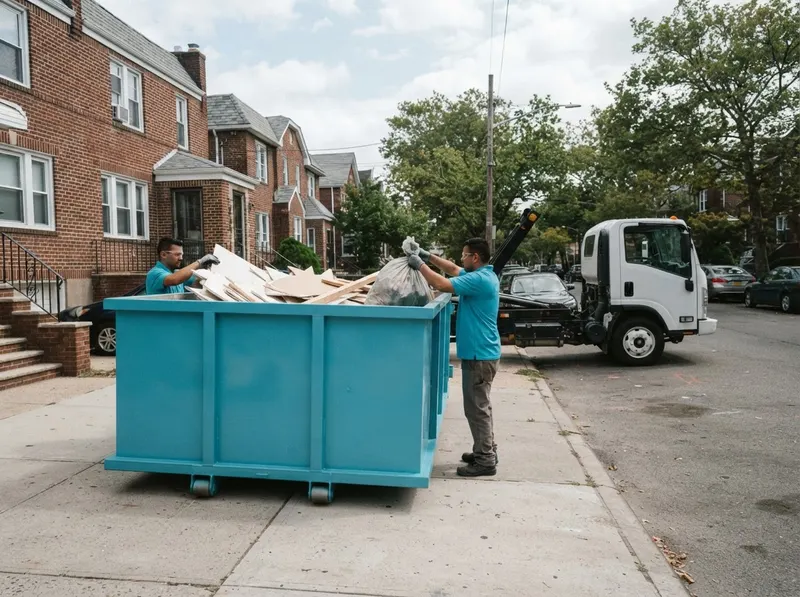
Dumpster rental in New York is a specialized container haulage service providing open-top roll-off boxes between 10 and 40 cubic yards for urban construction, demolition, and renovation waste disposal.
Get your free dumpster quote — New York

We only use your ZIP to check availability — no spam.

How Dumpster in New York Works

1
Snap a photo

Text or call a photo of your project or driveway — we'll size it right.

2
Get an upfront price

A firm, all-in price confirmed before we start — no surprises.

3
We deliver & pick up

Dropped where you want it, then picked up or swapped when you're done.

10-Yard Dumpster Rental in New York

10-Yard Dumpster Rental in New York, NY

Navigating tight street access in Greenwich Village, SoHo, or the East Village requires equipment with exact dimensions. A 10-yard roll-off fits within standard parking lane margins and private loading bays where larger 30-yard or 40-yard haulers simply cannot maneuver. For brownstone gut renovations in Harlem or townhouse bath remodels on the Upper West Side, this footprint preserves critical street clearance while keeping heavy waste off public sidewalks. If a project generates high-density waste such as brick, plaster, or concrete from an Upper East Side co-op update, a 10-yard container prevents trucks from exceeding legal road weight thresholds enforced across Manhattan corridors like 11th Avenue and the FDR Drive.

Choosing the 10-yard capacity trades maximum interior cubic volume for load stability and strict urban compliance. Bulky commercial cleanouts in the Financial District or multi-floor structural demolitions in Hell's Kitchen require larger containers, but a 10-yard unit is the ideal logistical asset when street space is limited and weight density is high. Placing a container on a public roadway in New York requires a valid NYC DOT street occupancy permit, whereas private loading docks or off-street driveways avoid municipal permit steps. Site superintendents and property managers rely on this container footprint to keep site corridors clear and municipal haul schedules on time without unexpected logistics failures.

10-Yard Heavy Inert Debris (Concrete/Brick/Plaster, On-Site Confirmed)$450 - $600
10-Yard Standard Residential Remodel (Drywall/Flooring/Trim)$375 - $525
10-Yard Cleanout / Bulky Waste Container$350 - $495
Minimum Service Dispatch Baseline$250
How much debris can a 10-yard dumpster hold on a New York job site?

A 10-yard dumpster holds 10 cubic yards of waste, which equals roughly 3 to 4 standard pickup truck loads or 50 to 70 standard contractor trash bags.

Do I need a municipal permit to place a 10-yard dumpster on a New York street?

Yes, placing any roll-off container on a public street or roadway in New York requires a valid NYC DOT street permit, whereas private property and off-street docks do not.

Will a 10-yard roll-off truck fit down narrow streets in Chelsea or Greenwich Village?

Standard roll-off single-axle trucks can navigate most narrow Manhattan corridors, provided there are clear traffic lanes and no double-parked vehicles blocking the drop spot.

15-Yard Dumpster Rental in New York

15-Yard Dumpster Rental in New York, NY

A 15-yard roll-off container serves as the primary standard for multi-room residential renovations and moderate commercial buildouts across New York County. When projects in neighborhoods like Greenwich Village or Chelsea require significant debris removal but lack the expansive staging areas demanded by 30-yard boxes, this mid-sized footprint delivers maximum capacity without blocking essential traffic arteries. It fits squarely into the footprint of a single passenger vehicle, allowing general contractors to stage waste disposal curbside along narrow crosstown streets without encroaching on moving traffic lanes or adjoining building bays.

Placement logistics in dense urban corridors demand absolute operational precision. Navigating deliveries along historic cobblestones in SoHo, active commercial loading zones in the Financial District, or residential blocks off Central Park West requires pre-cleared access and strict alignment with municipal street occupancy rules. When private off-street loading docks or driveways are unavailable, placement on a public roadway requires an approved NYC DOT street permit. The 4.5-foot sidewall height ensures ground crews can manually load dense material—such as plaster pulled from Upper West Side brownstones or pre-war floorboards in Harlem—without requiring specialized lift machinery.

Choosing a 15-yard container balances volume against weight thresholds. While larger containers risk exceeding legal road weight limits when filled with heavy construction solids, the 15-yard unit safely accommodates mixed municipal debris and moderate interior demolition refuse. For projects generating excessive masonry, brick, or uncrushed concrete from structural alterations near Columbia University or Washington Heights, dedicated low-volume heavy-debris containers prevent unexpected weight overage surcharges. Every placement is verified for overhead clearance from transit wires, tree canopies, and scaffold netting before drop-off.

Standard 15-Yard Mixed Renovation Refuse (Manhattan Sites)$525 - $725
15-Yard Commercial Tenant Fit-Out Disposal$575 - $795
Base Minimum Dispatch & Placement Fee$250 minimum
Do I need a municipal permit for a 15-yard dumpster in New York?

A permit from the New York City Department of Transportation is required whenever a container rests on a public street or roadway rather than private property.

Will a 15-yard delivery truck fit down narrow New York side streets?

Single-axle roll-off trucks maneuver down standard one-way Manhattan side streets, provided parking lane clearances and double-parking restrictions are maintained during delivery.

What materials are prohibited from a 15-yard roll-off in New York?

Hazardous substances, wet paint cans, chemical solvents, asbestos, automotive fluids, and non-certified refrigeration appliances cannot be placed into New York disposal containers.

20-Yard Dumpster Rental in New York

20-Yard Dumpster Rental in New York, NY

The 20-yard container functions as the standard benchmark for multi-room interior renovations, retail buildouts, and residential gut projects across Manhattan. Its four-foot side walls allow crews to manually toss heavy framing studs, sheetrock, and subflooring over the sides without requiring specialized mechanical loaders. When working within historic districts in SoHo or Greenwich Village where street parking lanes remain constricted, the 20-yard footprint balances volume capacity against critical curb lane space. Choosing a 20-yard container prevents the premature overflow common to 10-yard boxes while avoiding the clearance complications of high-sided 30-yard roll-offs along tree-lined corridors like those found on the Upper West Side.

Navigating New York Department of Transportation (NYC DOT) street placement requires strict adherence to clear-path rules and active permit protocols. If a roll-off container occupies a metered lane or active traffic corridor in Chelsea or Hell's Kitchen, the placement requires an approved commercial street occupancy permit with reflective channelizing devices. Deliveries routed through narrow East Village corridors or commercial zones in the Financial District demand exact truck approach routes to bypass low-hanging scaffolding and double-parked delivery vans. Contractors managing multi-family brownstone gut cleanouts in Harlem and Washington Heights gain predictable waste staging without blocking pedestrian walkways or building egress corridors.

Controlling total disposal expenditure depends entirely on managing material density and weight distribution. Standard 20-yard rentals carry structured weight allowances calibrated for mixed construction debris; loading solid masonry, cured slab concrete, or dense excavation dirt will quickly trigger heavy overage rates at regional transfer scales. For projects along the commercial avenues of the Upper East Side, separating lightweight demolition materials from dense aggregate maintains baseline operating budgets. We provide direct container placement, clear scale documentation, and precise switch-out hauling to keep high-density New York sites operating smoothly.

20-Yard Mixed Remodel Debris (Standard Allowance)$550 - $750
20-Yard Light Construction / Drywall Haul$500 - $700
20-Yard Heavy Demolition Surcharge Tier$750 - $1,050
Baseline Site Dispatch / Minimum Charge$250 minimum
What physical dimensions does a 20-yard dumpster occupy on a New York street?

A typical 20-yard roll-off measures 22 feet long, 8 feet wide, and 4 feet tall, taking up approximately one full standard passenger car parallel parking space on a New York roadway.

Do I need a NYC DOT permit to stage a 20-yard dumpster on a public roadway in New York?

Yes, placing any container on a public street or designated parking lane in New York requires an official NYC DOT street obstruction permit and required safety reflectors.

Can heavy concrete or brick be loaded into a 20-yard container in New York?

Dense aggregates like brick, stone, and slab concrete should only be loaded to designated partial fill lines to comply with New York state highway legal hauling weight limits.

30-Yard Dumpster Rental in New York

30-Yard Dumpster Rental in New York, NY

Managing waste on dense urban job sites requires rigid logistical control. A 30-yard roll-off container is the industry standard for extensive gut renovations along the Upper West Side, retail overhauls in SoHo, and floor-by-floor commercial renovations in the Financial District. When site space allows, choosing a 30-yard roll-off over multiple smaller bins minimizes truck exchanges, keeps loading docks clear, and prevents work stoppages on active construction sites. The primary trade-off involves physical footprint: because the container measures 22 feet in length, placement on narrow corridors in Greenwich Village or East Village requires precise curb clearance and coordination.

Operating in New York County mandates compliance with municipal roadway rules. If you cannot place the roll-off on private property or within a private loading bay, placing a container on a public roadway requires an approved NYC DOT street permit along with required reflective markers. We deliver across neighborhoods from Chelsea and Hell's Kitchen to Harlem and Washington Heights, coordinating drop-offs around tight parking regulations, bus lanes, and alternate-side schedules. All waste manifests are handled directly to ensure clear billing with no hidden transfer surcharges.

Standard 30-Yard Rental (Light Construction / Bulky Waste)$750 - $1,050
Commercial Renovation Debris (Mixed Demo Materials)$850 - $1,250
Multi-Unit Estate Cleanout (Household Bulky Items)$700 - $950
Emergency Dispatch / Off-Hour Spotting$900 - $1,400
Do I need a NYC DOT permit for a 30-yard dumpster in New York?

Yes, placing a 30-yard roll-off on a public street or curb lane anywhere in New York requires a valid NYC DOT street obstruction permit. If the container sits entirely inside a private loading dock or designated private property, a municipal street permit is not required.

Can a 30-yard delivery truck navigate narrow streets in Greenwich Village or SoHo?

Yes, our drivers routinely navigate tight Manhattan corridors by planning approach routes around narrow turns, scaffolding, and one-way streets. Customers must ensure roughly 60 feet of straight-line clearance so the roll-off hoist can safely lower the container to the pavement.

What materials are prohibited from a 30-yard roll-off in New York?

Prohibited items include hazardous chemicals, wet paint, asbestos, industrial solvents, batteries, freon-bearing appliances, and sealed gas cylinders. Clean construction lumber, sheetrock, masonry, packaging, and interior fixtures are fully acceptable.

40-Yard Dumpster Rental in New York

40-Yard Dumpster Rental in New York, NY

A 40-yard roll-off container measures approximately 22 feet long, 8 feet wide, and 8 feet high, holding the equivalent of roughly 16 pickup truck beds. This scale fits major commercial interior demolitions near the Financial District or full-building renovations along Broadway. Opting for a 40-yard container eliminates the labor loss of staging debris inside a job site while waiting for multiple smaller turnarounds. However, heavy materials such as solid concrete, masonry brick, and unseparated soil are unsuited for a 40-yard container due to legal hauling weight limits enforced throughout New York County; dense aggregate loads require smaller 10-yard or 20-yard dedicated containers to avoid exceeding municipal road limits.

Navigating Manhattan logistics requires precise container placement planning. In tight corridors like SoHo, Greenwich Village, or the East Village, staging an 8-foot-wide container alongside active traffic lanes demands structured site clearance. Roll-off trucks require at least 60 feet of straight-line approach and 20 feet of overhead clearance to safely tilt and slide the container into position without snagging overhead wires or building canopies. If off-street staging such as a private loading dock or interior yard in Chelsea or Hell's Kitchen is unavailable, placing the container on a public roadway requires an approved NYC Department of Transportation (DOT) street permit to maintain curb compliance and prevent project delays.

Commercial Gut & Multi-Floor Fit-Out (Standard Rental + Base Tonnage)$950 - $1,400
Full Building Cleanout & Light Bulky Debris$850 - $1,250
Large-Scale Construction Framing & Drywall Tear-Out$900 - $1,350
Minimum Service Base Charge (Small-Scale / Dedicated Dispatch)$250 minimum
Do I need a municipal street permit for a 40-yard dumpster in New York?

An NYC DOT street permit is required whenever a roll-off dumpster rests on a public street or designated curb lane in New York instead of private property.

Can I put heavy brick or poured concrete into a 40-yard dumpster in New York?

Heavy aggregates like solid concrete and brick exceed Department of Transportation road weight thresholds when placed in a 40-yard container, making 10-yard or 20-yard heavy-material containers the required choice.

How much physical clearance is required to drop a 40-yard roll-off on a New York street?

Placement requires approximately 60 feet of linear curb space and at least 20 feet of vertical clearance so the roll-off rails can safely hoist and slide the 22-foot steel container.

Construction & Demolition (C&D) Dumpsters in New York

Construction & Demolition (C&D) Dumpsters in New York, NY

Managing structural waste in New York County requires exact logistical staging to prevent jobsite congestion. On tight corridor projects along Columbus Avenue on the Upper West Side or active interior rebuilds in SoHo, a dedicated C&D container isolates framing lumber, broken plaster, and concrete rubble from pedestrian walkways. Dedicated C&D roll-offs eliminate the labor-intensive double-handling associated with small bag systems or multi-trip box trucks, ensuring active demolition crews maintain continuous forward momentum without stopping work for debris buildup.

Deploying heavy containers in dense neighborhoods like Chelsea or the Financial District requires strict adherence to New York City Department of Transportation (NYC DOT) street occupancy guidelines. If your jobsite lacks an off-street loading bay or private driveway, roll-off containers placed on city roadways require appropriate municipal permits, reflective safety markers, and proper street-timber planking to protect the underlying asphalt. Single-stream masonry projects demand heavy-duty 10-yard or 20-yard low-profile boxes to stay within axle weight thresholds, whereas large-scale interior framing gut-outs along 125th Street in Harlem benefit from 30-yard or 40-yard high-walled containers for bulky architectural waste.

Every structural project involves specific material weight densities that dictate container selection. Dense rubble such as brick, concrete slabs, and mortar beds reaches road-weight limits quickly, making open-top low-side units the correct logistical choice over high-volume containers. For mixed gut-rehabs in Greenwich Village or brownstone renovations along the Upper East Side, a balanced tonnage allowance prevents mid-project hauling delays. Exact job costs reflect container volume, debris density, and jobsite duration, with clear baseline rates confirmed during intake.

10-Yard Heavy Masonry & Dirt Container (Concrete/Brick)$250 - $650
20-Yard Standard C&D Roll-Off (Mixed Framing/Drywall)$550 - $850
30-Yard Large Renovation Dumpster (Full Interior Demolition)$700 - $1,050
40-Yard Commercial Fit-Out Container (Bulky Timber & Light Debris)$850 - $1,300
Do I need a city permit for a construction dumpster on a New York street?

Yes, any roll-off container placed on a public roadway or curbside lane in New York requires a valid NYC DOT street occupancy permit. Containers staged inside private property lines, construction gates, or designated off-street loading docks do not require municipal street permits.

How are heavy materials like concrete and brick billed in New York?

Heavy masonry materials are typically dispatched in smaller 10-yard or 20-yard containers with dedicated flat-rate tonnage caps to comply with New York state transit weight limits. Clear per-ton overage rates apply only if the total debris exceeds the agreed baseline limit established at dispatch.

Can delivery trucks navigate narrow historic blocks in Lower Manhattan?

Yes, tandem-axle and single-axle roll-off trucks maneuver down tighter residential corridors in neighborhoods like Greenwich Village and the East Village. Drivers evaluate double-parking clearance, overhead scaffolding, and low-hanging utility lines prior to backing the container into position.

Heavy Masonry & Concrete Containers in New York

Heavy Masonry & Concrete Containers in New York, NY

Masonry demolition in dense Manhattan corridors requires dedicated aggregate containers rather than oversized general debris bins. Clean concrete and brick weigh roughly 2,000 to 3,000 pounds per cubic yard, which causes standard 30-yard or 40-yard mixed waste bins to exceed legal Department of Transportation road limits long before the container reaches physical capacity. Utilizing low-profile 10-yard heavy aggregate containers ensures structural stability for the haul truck, keeps hauling fully compliant with axle-weight mandates, and eliminates the heavy surcharge penalties common on mixed demolition loads.

Navigating job sites near the Financial District, SoHo cobblestones, or brownstone rows along the Upper East Side requires calculated placement. Tight curb margins, active bus lanes, and scaffolding footings on corridors like 8th Avenue in Chelsea or Broadway through Morningside Heights demand precise drop zones. When projects lack off-street loading docks or private drive aprons, containers placed on municipal roadways require an official New York City DOT street obstruction permit. Roll-off drivers use specialized maneuvering to place steel containers flush against curb lines, avoiding fire hydrants and utility vaults while keeping active traffic lanes clear.

Selecting a dedicated concrete box trades volume for weight efficiency. While a dedicated masonry container will not accommodate mixed drywall, lumber, or general municipal trash, it provides the lowest disposal overhead per ton for structural demo. Sites in Harlem, Hell's Kitchen, and Washington Heights running gut renovations or foundation excavations benefit from keeping aggregate streams isolated from initial soft demolition phases.

10-Yard Concrete-Only Container (Clean Cured Slab & Footings)$250 - $750 base + material weight scale
10-Yard Brick & Masonry Block Container (Clean Historic / Clay Brick)$250 - $800 base + material weight scale
10-Yard Mixed Aggregate Container (Stone, Tile, Mortar & Earth)$250 - $850 base + material weight scale
What materials are prohibited inside heavy masonry containers in New York?

General refuse, treated lumber, drywall, plastics, asbestos insulation, and hazardous liquids cannot be mixed into heavy aggregate containers in New York.

Do I need a municipal permit to park a concrete container on a New York street?

A valid New York City Department of Transportation (NYC DOT) street permit is required whenever a container rests on a public roadway or curbside parking lane in New York.

How high can I fill a concrete container on a New York job site?

Concrete and brick cannot be loaded above the top rail of the container to ensure aggregate stays secure and meets New York transit safety laws during hauling.

Commercial Front-Load Container Accounts in New York

Commercial Front-Load Container Accounts in New York, NY

Operating a commercial facility along high-traffic corridors like Broadway in SoHo or dense mixed-use blocks in Chelsea requires absolute logistical certainty. Commercial front-load container accounts solve recurring waste build-ups by replacing uncontrolled sidewalk staging with locked, heavy-gauge steel bins. While open-top roll-off dumpsters suit temporary interior gut renovations, permanent front-load accounts provide the continuous, predictable capacity required by property managers and commercial operations. Front-load trucks lift and empty bins directly on-site using automated hydraulic forks, eliminating the need to haul containers away for each disposal cycle.

Navigating Manhattan collection routes involves strict regulatory frameworks and physical clearance constraints. From the narrow loading docks of the Financial District to loading bays near Columbia University in Washington Heights, front-load placement requires exact overhead and approach measurements. NYC Department of Sanitation and municipal curb rules penalize uncontained trash and obstructed thoroughfares. Maintaining an active front-load account prevents sidewalk blockages on historic streets across Greenwich Village and the East Village, keeping loading corridors clean and ensuring uninterrupted waste clearance that matches your operational volume.

2-Yard Front-Load (1x Weekly Collection)$250 - $425 / month
4-Yard Front-Load (1x Weekly Collection)$375 - $580 / month
6-Yard Front-Load (Multiple Weekly Pickups)$550 - $920 / month
8-Yard Front-Load High-Volume Account$750 - $1,400+ / month
How does a commercial front-load container account function in New York?

A permanent front-load container is staged at your commercial loading bay or private property footprint, with collection vehicles emptying the bin on an agreed weekly schedule across New York County.

Can front-load trucks access tight alleys in Greenwich Village or SoHo?

Front-load vehicles require a minimum vertical clearance of 14 feet and direct forward approach access, which a field representative verifies on-site before establishing account routing in New York.

Are there extra tipping or weight surcharge fees for New York accounts?

Standard operational tonnage is structured directly into the recurring agreement baseline, and material overages or excessive heavy-dense items are detailed transparently before dispatch.

Same-Day Dumpster Delivery & Swap-Outs in New York

Same-Day Dumpster Delivery & Swap-Outs in New York, NY

Urban construction sites along narrow corridors like <strong>Greenwich Village</strong> and <strong>SoHo</strong> cannot tolerate stagnant debris piling up on sidewalks or staging areas. When demolition volume exceeds initial projections, a continuous swap-out strategy replaces full containers with fresh boxes, preventing operational shutdowns on high-value renovation projects. Unlike standard multi-day delivery windows, rapid same-day dispatch allocates dedicated roll-off equipment to navigate congested corridors including 10th Avenue in <strong>Hell's Kitchen</strong> and Broadway through the <strong>Financial District</strong>.

Navigating Manhattan street operations requires strict adherence to municipal roadway logistics. Placing a roll-off container on public streets in <strong>New York County</strong> requires an active New York City Department of Transportation (NYC DOT) street permit, compliant reflective safety tape, and durable street protection boards to safeguard asphalt. For projects near historic brownstones in the <strong>Upper West Side</strong> or high-density residential towers in the <strong>Upper East Side</strong>, timed swap-outs ensure roll-off drivers pull full containers and place replacements during permitted loading hours without blocking morning transit or commercial freight bays.

Selecting a live swap-out service eliminates the double-handling of heavy material. When gutting multi-floor brownstones in <strong>Harlem</strong> or staging commercial retrofits in <strong>Chelsea</strong>, crews load debris directly into the roll-off box instead of staging waste in building lobbies or alleys. This workflow keeps job sites compliant with municipal safety standards while maintaining the continuous pace demanded by general contractors and property managers.

10-Yard Mini Container Same-Day Drop$250 - $475
20-Yard Demolition Swap-Out (Heavy Debris)$495 - $750
30-Yard Construction Container Rapid Placement$625 - $900
40-Yard Commercial Renovation Turnaround$775 - $1,150
How quickly can a same-day container swap be executed on a job site in New York?

Same-day swap-outs in New York are generally scheduled within a 2- to 4-hour window when requested during early morning dispatch hours, allowing active crews to continue loading without halting demolition.

What street permits are necessary for same-day roll-off placement on public streets in New York?

A valid NYC DOT street occupancy permit is required before dropping any dumpster on a public street or curb lane in New York; private property placements such as loading bays or driveways do not require this permit.

Can roll-off trucks access narrow streets in historic New York neighborhoods?

Single-axle and specialized short-wheelbase trucks are dispatched to navigate tighter streets across areas like the East Village and Washington Heights, provided the designated curb spot is clear of parked vehicles.

Contractor Long-Term Rental Accounts in New York

Contractor Long-Term Rental Accounts in New York, NY

Long-term rental accounts fit multi-stage gut renovations, commercial fit-outs, and new developments that require container staging for months rather than days. A standard short-term rental imposes rigid daily holding fees and disconnected single-haul scheduling. In contrast, an enterprise account gives site managers predictable swap windows, direct logistics oversight, and transparent weight documentation. The trade-off requires consistent on-site waste generation to balance ongoing container placement with active street or loading-dock footprints.

Executing long-duration waste logistics in New York County demands strict compliance with dense urban constraints. Placing roll-offs along active corridors like Broadway in SoHo, narrow residential blocks in Greenwich Village, or staging zones near Columbia University in Washington Heights requires meticulous adherence to New York City Department of Transportation curb-use guidelines. Dedicated fleet drivers navigate tight turns between parked vehicles and delivery traffic, utilizing compact roll-off trucks built specifically for tight Manhattan streetscapes.

Account managers maintain transparent tonnage tracking to eliminate unexpected disposal penalties. Every haul from sites in Chelsea, Hell's Kitchen, or the Financial District receives certified transfer station scale tickets, matching billed rates directly against documented debris weight. Project supervisors lock in predictable operational cadences—from early morning hauls along the Upper West Side to coordinated off-hour swaps near the Empire State Building—keeping job sites clear and fully compliant.

Ongoing Account Setup & Initial Placement$250 - $450 base (confirmed on-site)
10-Yard Container Recurring Swap Cycle$475 - $700 per haul (inclusive of base tonnage)
20-Yard Container High-Frequency Haul Cycle$600 - $900 per haul (inclusive of base tonnage)
30-Yard Container Commercial Rotation$750 - $1,150 per haul (inclusive of base tonnage)
How are NYC DOT street permits handled for long-term containers in New York?

Containers placed on public roadways in New York require valid New York City Department of Transportation street occupancy permits, which must be secured and renewed for the duration of the project.

What happens if a job site in New York generates more tonnage than anticipated?

Excess tonnage is billed at a clearly defined per-ton overage rate based on official transfer station scale tickets provided with each haul manifest.

Can multiple job sites across New York share a single master billing account?

General contractors operating simultaneous builds in neighborhoods like the Upper East Side, Harlem, and the East Village can consolidate all container placements and swaps under a single master billing profile.

Choosing Your Dumpster in New York

Selecting the correct roll-off container configuration for a project in Manhattan requires matching the physical volume and gross weight of the waste material with the accessible curbside footprint. If you are renovating a single bathroom, gutting a compact pre-war kitchen, or performing a modest apartment clearout in Greenwich Village or the East Village, choose a 10-yard or 15-yard dumpster. These low-profile containers measure 12 to 16 feet in length, fitting neatly into a standard parallel parking stall without obstructing active bicycle lanes, bus lanes, or pedestrian crosswalks. If you are executing a full multi-room apartment gut, retail buildout, or brownstone structural framing tear-out in Harlem or the Upper West Side, choose a 20-yard or 30-yard dumpster to accommodate high-volume drywall sheets, framing studs, cabinetry, and packaging materials. For ground-up structural construction, complete multi-floor office decommissioning, or major industrial cleanouts in the Financial District, choose a 40-yard container to maximize raw cubic capacity. The critical operational trade-off is site footprint versus weight capacity: larger 30-yard and 40-yard containers provide massive interior volume but require up to 22 linear feet of street curb space plus 40 to 60 feet of direct straight-line approach clearance for the roll-off hoist mechanism. Conversely, smaller 10-yard and 15-yard containers fit into restrictive loading bays and tight residential cross-streets with minimal disruption, but dense demolition debris such as wet plaster, concrete pavers, ceramic tile, and solid brick can quickly hit weight limits, requiring scheduled mid-project swaps to maintain legal road-haul weight compliance.

Dumpster Pricing in New York

Your exact price is confirmed before any work begins.

Dumpster Across New York

Operating roll-off container logistics in New York County demands rigorous compliance with the NYC Department of Transportation (NYC DOT) and municipal building safety codes. Any container placed on public asphalt, curb lanes, or metered street parking requires an active DOT street occupancy permit paired with protective timber planks placed beneath the container steel wheels to preserve the street surface. Precision delivery trucks navigate tight radiuses around high-density landmarks like Central Park, the Empire State Building, Rockefeller Center, and Washington Square Park, coordinating drop times around alternate-side parking rules, morning delivery curfews, and designated truck routes along avenues like 10th Avenue and 11th Avenue. In historic districts across SoHo, Greenwich Village, and Chelsea, narrow one-way cross-streets flanked by outdoor dining structures and protected bike paths require compact single-axle hoist trucks to position containers safely. In northern Manhattan neighborhoods like Harlem and Washington Heights, steep street grades and overhead transit lines near Columbia University require planned approach angles to clear roll-off hoist mechanisms without obstructing pedestrian crosswalks, fire hydrants, or MTA bus corridors.

Neighborhoods we cover: Upper East Side, Upper West Side, Harlem, Greenwich Village, Chelsea, Hell's Kitchen, Financial District, East Village, SoHo, Washington Heights.

Dumpster in New York: Questions Answered

Do I need an NYC DOT permit to place a dumpster on the street in New York?

Yes, any roll-off dumpster placed on a public street, curbside, metered stall, or roadway in New York legally requires an NYC DOT street occupancy permit. If the container is positioned entirely on private property, such as an interior parking pad, private driveway, or dedicated commercial loading bay, no municipal DOT street permit is needed.

How much does a 20-yard dumpster rental cost in New York?

A 20-yard dumpster rental in New York typically costs between $650 and $825. This upfront flat rate covers container delivery, pickup, an initial 7-day rental period, and a dedicated 2-ton disposal weight allowance. Additional weight above 2 tons is billed at a standard rate between $110 and $145 per ton based on certified transfer station scale tickets.

What items and materials are prohibited from dumpster containers in New York?

Prohibited items under New York State and NYC environmental regulations include wet paint, chemical solvents, motor oil, raw asbestos, automotive batteries, intact rubber vehicle tires, medical biohazard waste, pressurized propane cylinders, and consumer electronics. Acceptable materials include wood framing, drywall, plaster, flooring, metal pipe, masonry rubble, paper packaging, and general non-hazardous household debris.

Can delivery trucks maneuver down narrow cross-streets in New York?

Yes, our logistics fleet utilizes specialized single-axle roll-off trucks engineered specifically for dense Manhattan cross-streets, tight turning radiuses, and corridors lined with parked cars. Deliveries are scheduled around municipal alternate-side parking windows and commercial loading hours to guarantee adequate clearance for the truck hoist mechanism.

How fast can a full dumpster be swapped out on an active job site in New York?

Scheduled dumpster swap-outs across Manhattan and New York County can typically be completed within 24 to 48 hours of notification. When high-volume demolition projects demand continuous waste removal, multi-container cyclic swaps can be pre-arranged with active dispatch by calling (332) 223-3018.

What happens if a parked vehicle blocks the dumpster delivery spot in New York?

If an unauthorized parked vehicle or blocked curbside prevents the roll-off driver from safely lowering the container at the scheduled time, the carrier assesses a dry-run trip fee of $175 to $250 to cover vehicle transit costs. Setting out safety cones or reserving curbside space in accordance with DOT permit parameters prevents drop-off aborts.

How is the weight of my dumpster measured and verified in New York?

Container weight is measured using state-certified gross-tare-net scale systems at licensed regional transfer stations. The roll-off truck weighs the vehicle and loaded container upon arrival, dumps the debris inside the facility, and re-weighs the empty truck on departure to establish the certified net waste tonnage documented on your final receipt.

Are protective boards required under roll-off dumpster wheels on New York streets?

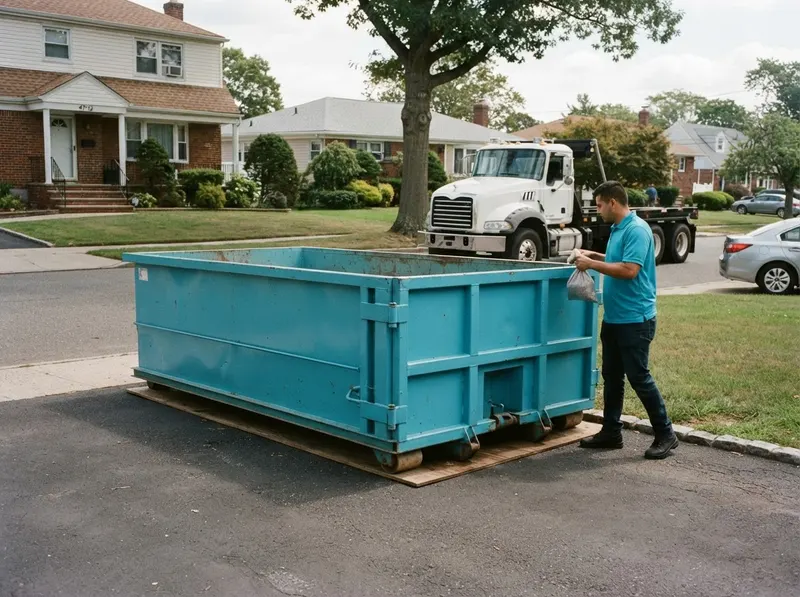
Yes, NYC DOT street placement guidelines require heavy wood planks (such as 2x10 lumber or thick plywood pads) to be placed under the steel rollers and support rails of the container. This distribution layer shields the public asphalt and street surface from indentation, rutting, and structural cracking during loading and retrieval.

Can I rent a dedicated container for heavy concrete, brick, or rock in New York?

Yes, dedicated clean masonry and concrete dumpsters are available in 10-yard and 15-yard configurations. These containers must contain exclusively inert mineral rubble—such as cured concrete, brick, stone pavers, and ceramic tile—without mixed drywall, timber, or trash, allowing materials to be hauled directly to aggregate recycling plants at favorable flat pricing.

How many days is a standard dumpster rental period in New York?

The baseline rental agreement in New York includes 7 full days of on-site placement. If your construction or renovation timeline extends beyond this initial period, extended daily rental terms are available at an incremental rate of $15 to $25 per day, provided your municipal street occupancy permit remains active and valid.

Dumpster Guides for New York

Book Dumpster in New York Today

Call (332) 223-3018

New York Dumpster guides

How much does it cost to rent a dumpster in New York, NY? — Pricing Guide →What roll-off dumpster sizes are available for rent in Manhattan? — Complete Guide →Can I get a same-day dumpster delivery in New York, NY? — Complete Guide →NYC Prohibited Roll-Off Dumpster Items →